
PS5 UART Diagnostics: Error Codes Are Clues, Not a Parts List
A practical explanation of how Replay uses PS5 UART information during real motherboard diagnosis—and why the code alone is rarely the final answer.
What UART adds to a PS5 diagnosis
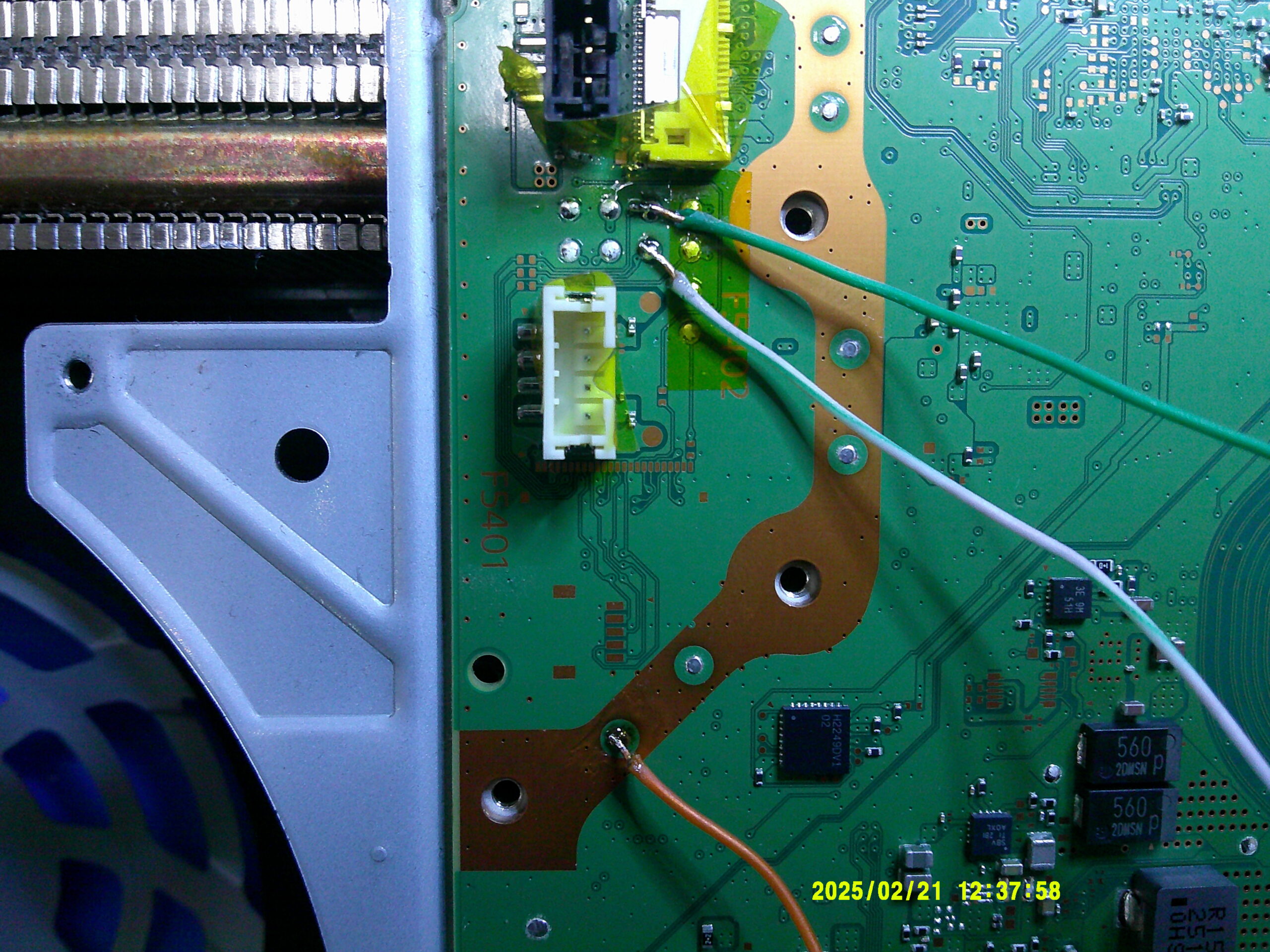
The PS5 can record internal diagnostic events that help narrow where a technician should investigate. Across Replay repair records, UART information has appeared alongside no-power, shutdown, thermal, Wi-Fi/Bluetooth, no-video and processor-initialization complaints. The value is in using those events to guide testing—not in reading a code and assuming the named subsystem is the failed part.
Codes that recur in our repair records
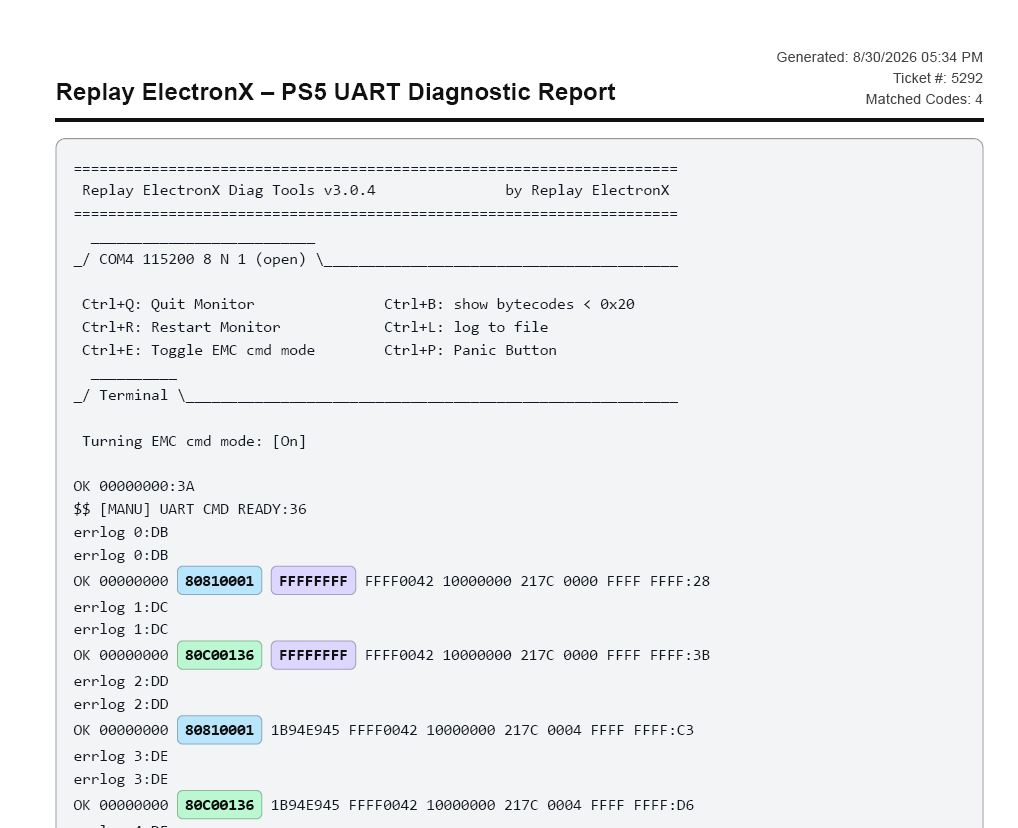
The following identifiers recur in the supplied Replay diagnostic reports. The labels below are deliberately conservative where the source material does not establish a fully verified public definition.
80000009
Seen alongside several different final diagnoses, so it is not specific enough to identify one failed component.
C0020303
Used as a diagnostic clue and correlated with hardware inspection rather than treated as proof by itself.
80C00140
Appears in several APU/thermal-related repair records.
808D0000
Useful when the physical cooling condition and shutdown behavior support a thermal diagnosis.
80810001
In contamination cases it appeared alongside other subsystem events, but electrical testing was still required to find the actual short.
80C00136
Do not interpret this as “replace the Bluetooth/Wi-Fi chip.” One Replay case required circuit-level testing to locate failed capacitors.
808B0027
Contextual; correlate with actual circuit findings.
80950000
It has appeared alongside hardware-related events and is not used alone as a board diagnosis.
B0088108
Some Replay reports describe a DBI/database-initialization or storage-related event, but also explicitly note that it appears contextual and should not be treated as the primary diagnosis without matching symptoms and hardware evidence.
80830018 / 80800000
We preserve the identifiers without inventing a public definition.
How we use the information
- Start with the customer’s symptom. No power, shutdown, no video, intermittent boot or another observable behavior.
- Read available diagnostic history. Look for combinations and recurrence rather than isolating one code.
- Inspect the hardware. Cooling condition, corrosion, previous repair damage, connectors and visible board condition can change the meaning of the symptom.
- Test electrically. Verify power conditions, shorts and suspect circuits with measurements appropriate to the case.
- Correlate before concluding. The final diagnosis should be supported by more than the code label.
Example: subsystem codes led to a circuit investigation—not a blind chip replacement
In a heavily contaminated PS5, UART history included 80810001, 80C00136, 808B0027 and 80000009. Thermal imaging and electrical testing then located a short in Wi-Fi-related circuitry. Failed capacitors were replaced and booting returned. The actual repair depended on board-level confirmation, not merely the subsystem names attached to the diagnostic events.
Example: similar codes can appear with a different final failure
Other Replay reports contain combinations such as C0020303, 80000009, 80C00140 and 80810001 alongside physical APU/thermal findings. That is exactly why this page is not presented as a universal “PS5 error-code dictionary.”
What UART cannot tell us by itself
A code history does not necessarily identify the exact failed capacitor, IC, trace, power rail or external cause of damage. It also cannot replace testing after previous repair work or contamination. For public-facing technical content, Replay should distinguish the code that was observed from the hardware failure that was independently confirmed.
