
PS5 Contamination Case: Wi-Fi Circuit Short and Motherboard Corrosion
This case shows why correcting one short circuit does not necessarily make a heavily corroded motherboard a reliable repair.
Case summary
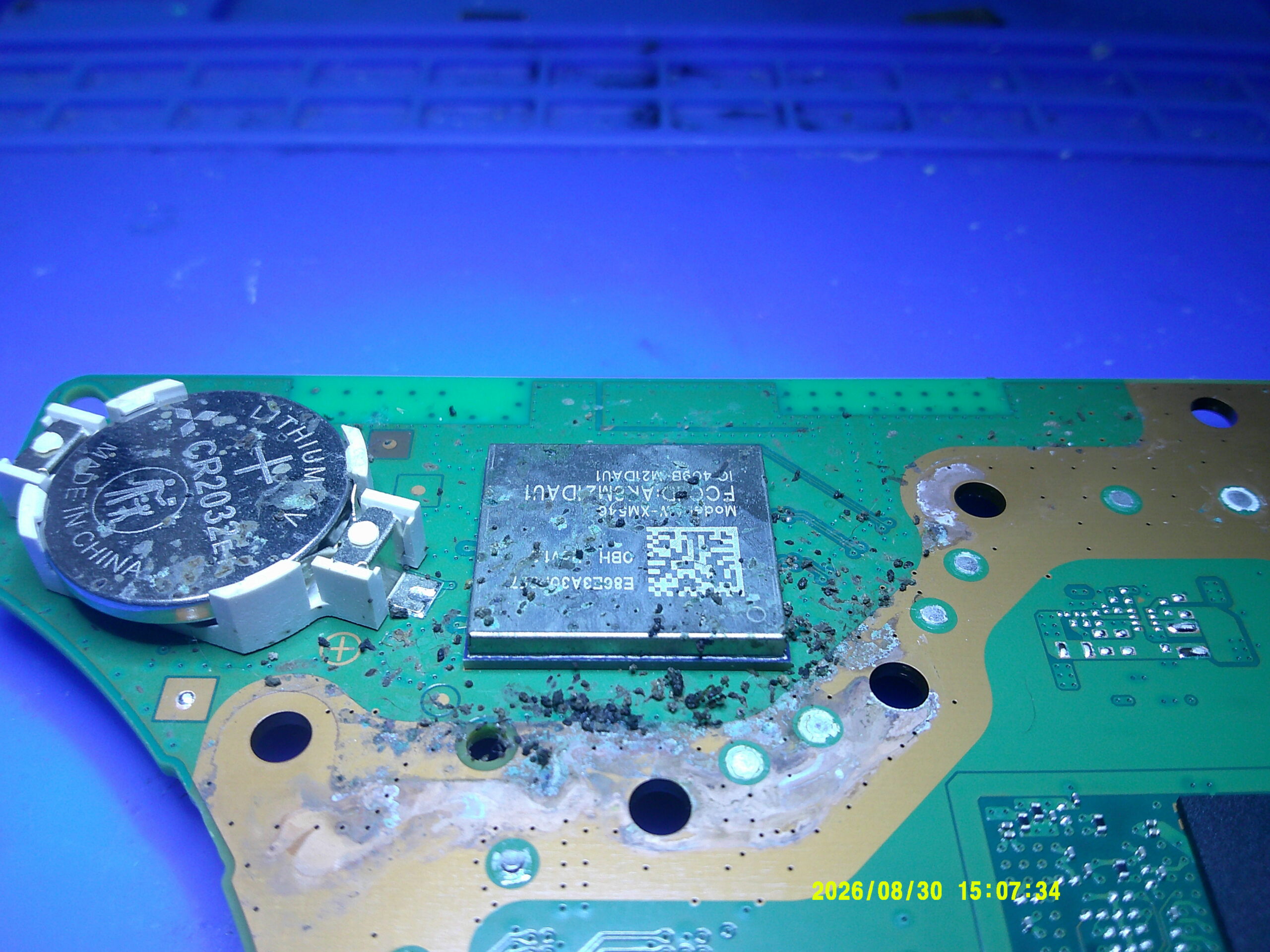
A PS5 with heavy biological contamination presented with power and subsystem-related diagnostic events. Board-level testing located an electrical short in the Wi-Fi-related circuit. Failed capacitors were replaced and the console returned to normal booting, but extensive corrosion remained.
Diagnostic clues pointed to a subsystem problem
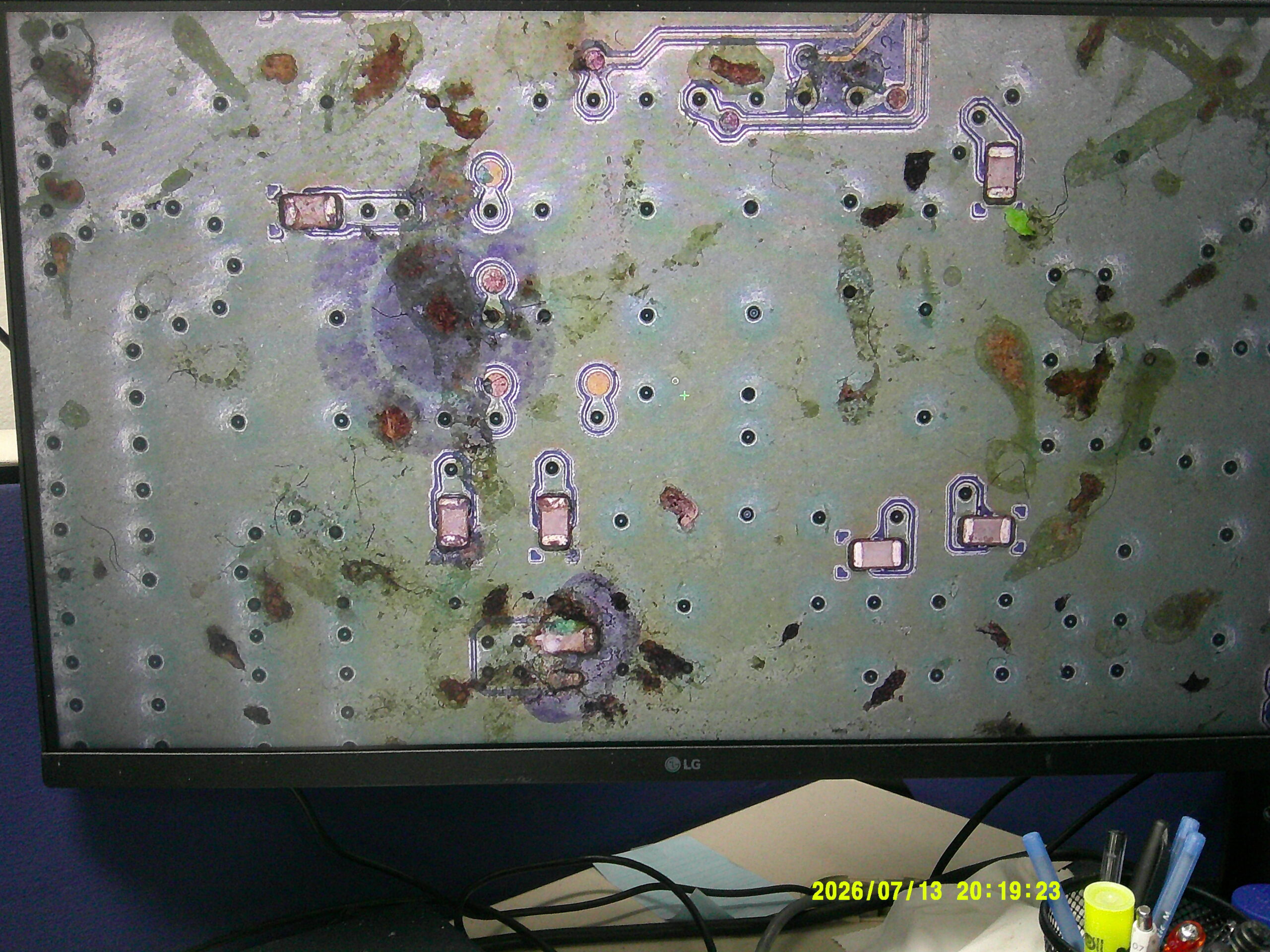
The UART record included 80810001, 80C00136, 808B0027 and 80000009. Those events were treated as clues rather than a parts list. Thermal imaging and electrical testing were then used to locate the actual shorted area in the Wi-Fi-related circuit.
The immediate electrical fault was repairable
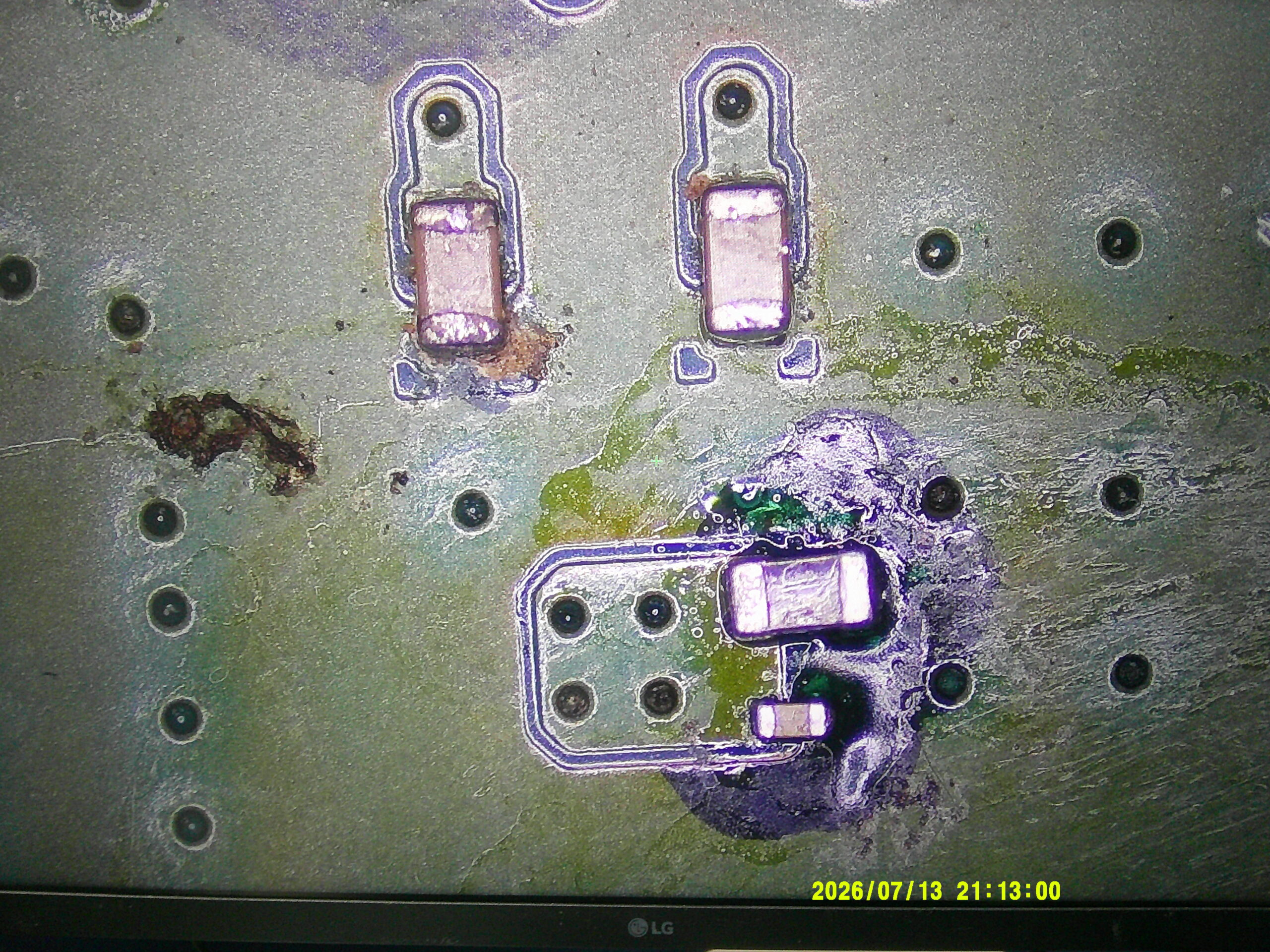
Failed capacitors responsible for the short were replaced. The console then powered on, booted normally and functioned as expected during testing. Corrosion had also partially damaged an LED cable, so a small trace repair was performed to restore the lights.
Why a booting console was still classified as no-fix
The immediate short was corrected, but contamination had already produced extensive corrosion and deterioration around the motherboard and nearby components. That meant additional failures could develop independently of the repaired capacitors. Replay therefore could not treat the console as a normal warrantable repair even though it was operating at pickup.
What this case demonstrates
Contamination diagnosis requires separating the component that is failing today from the condition of the board as a whole. This is one reason a responsible board-level diagnosis may end with “operational, but no-fix/no warranty” rather than continuing to replace parts on a deteriorating motherboard.
